Follow one idea
Baiheliang, 816 and wartime shelters are connected through hidden infrastructure rather than geographic convenience.
 隐渝YINYU · SOUTHWEST CHINA DMCDESIGN STUDY · NOT A FIXED TOUR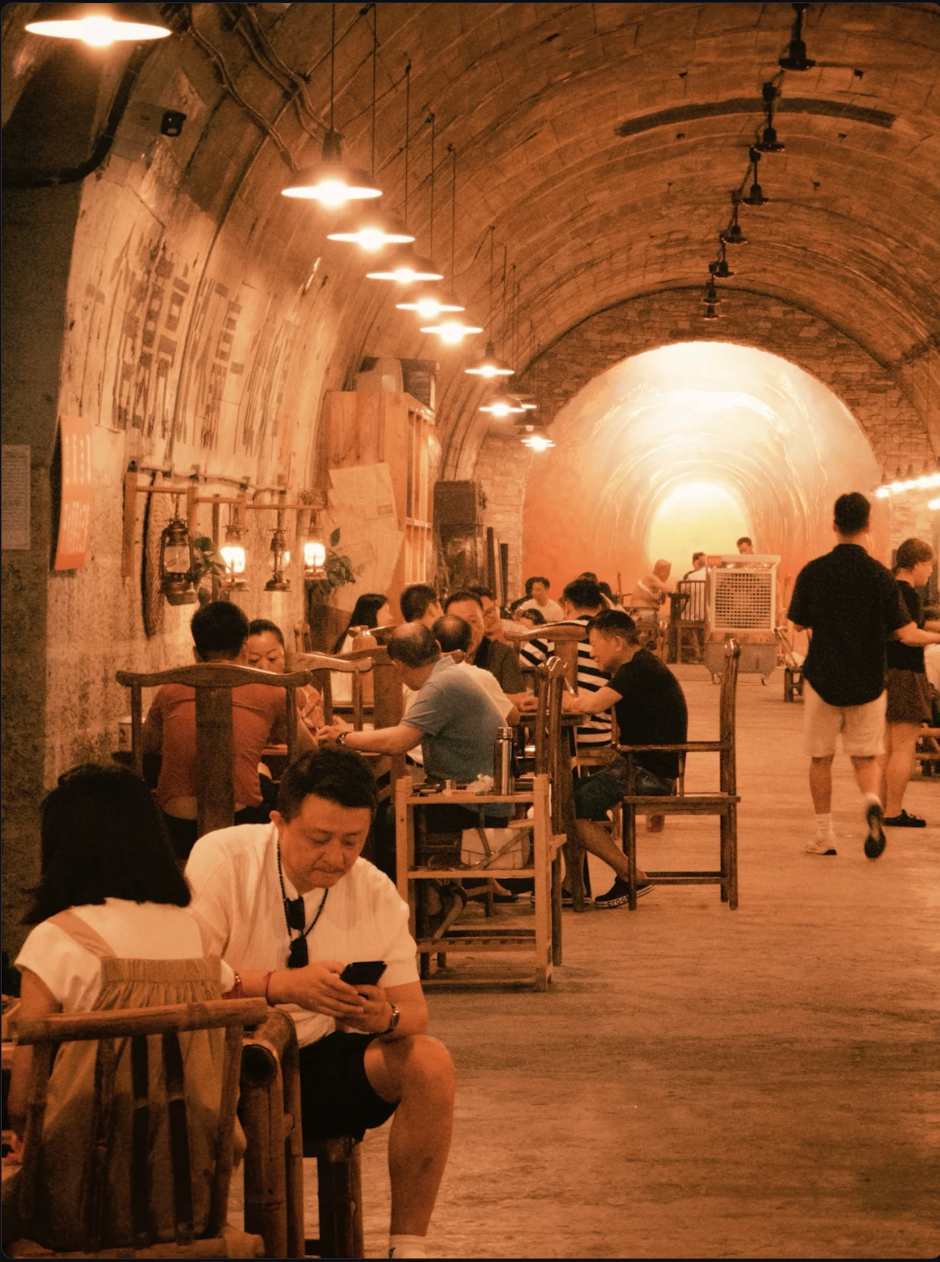
DESIGN STUDY · NOT A FIXED TOUR
How we would develop a private Chongqing journey for a traveller interested in architecture, infrastructure and the hidden systems that shape a city.
01 / BRIEF
What if Chongqing were understood not through its skyline, but through the structures that hold water, memory, shelter and movement beneath it?
02 / THE TRAIN THROUGH A BUILDING
A train seems to disappear into a high-rise. This is Liziba Station on Chongqing Rail Transit Line 2: a straddle-beam monorail station integrated into a multi-storey building. Online, it is often called the “light rail through a building” or the “train through an apartment building in China.”
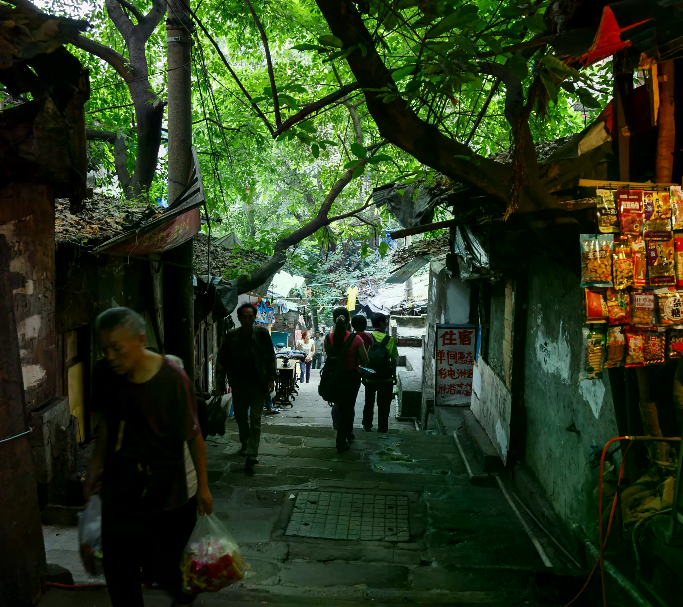
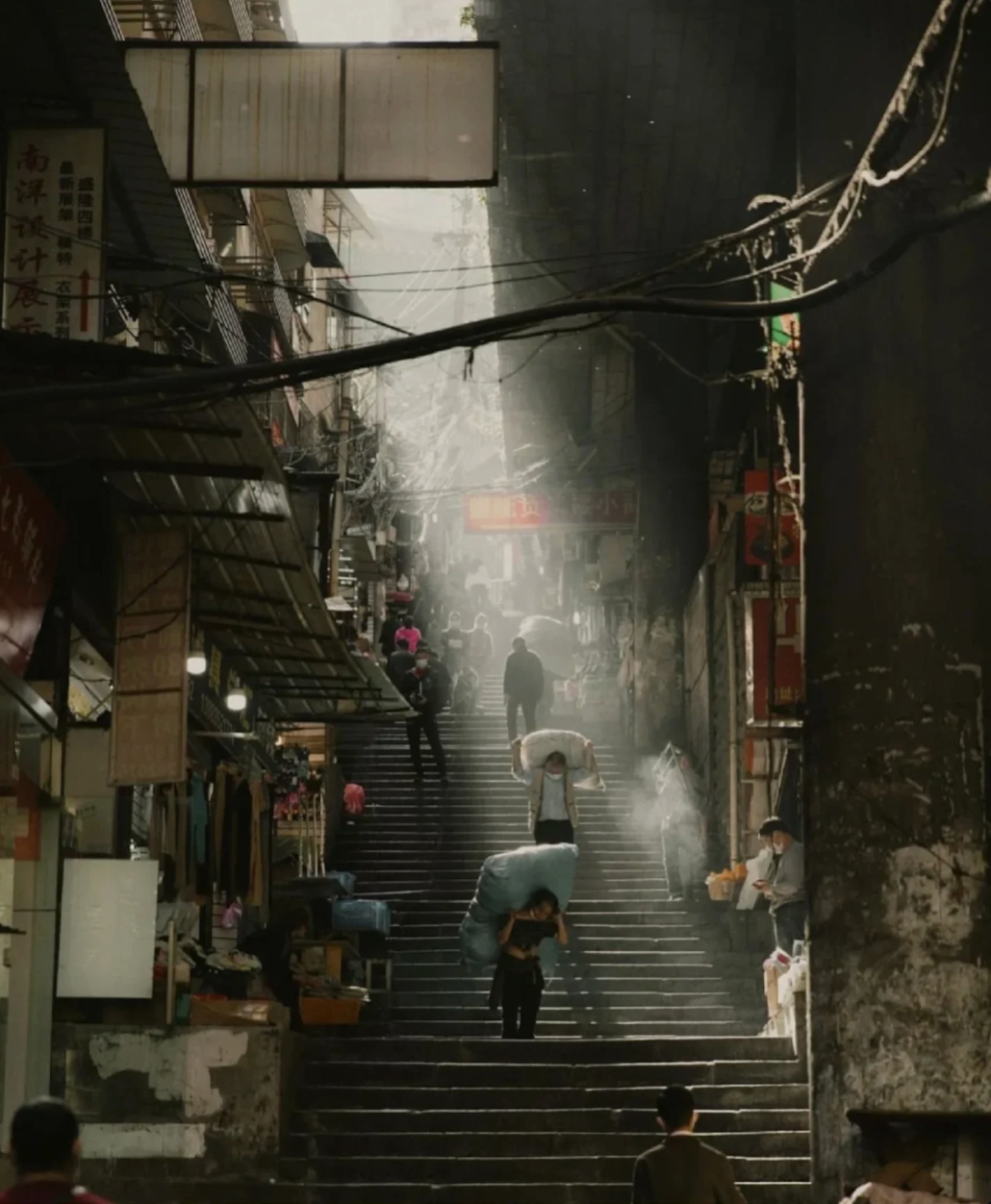
For us, Liziba is not a photograph-and-leave stop. It opens a larger architectural story about how a mountain city fits homes, rail, roads and everyday movement into the same vertical space. For an architecture-minded guest, we can connect it with hillside neighbourhoods, wartime tunnels, hotpot inside a former shelter, Baiheliang’s underwater record and the vast 816 underground project — using Chongqing as the gateway to a deeper journey through Southwest China.
03 / DESIGN DECISIONS
Baiheliang, 816 and wartime shelters are connected through hidden infrastructure rather than geographic convenience.
816 requires travel and attention. The design gives it space instead of adding more famous attractions.
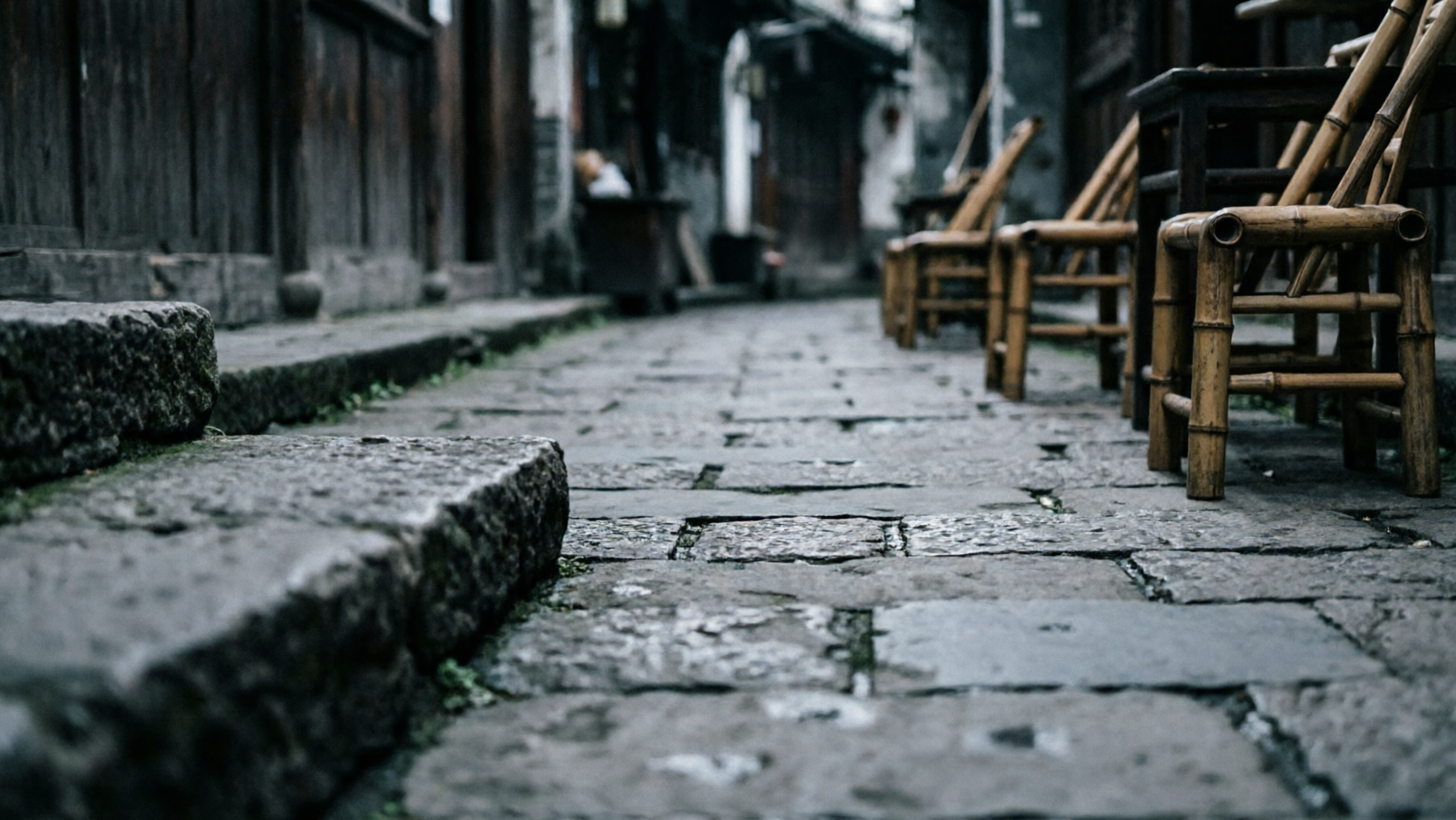
Water levels, tunnel scale, temperature, sound and mountain geology turn explanation into lived understanding.
A meal in a repurposed shelter reconnects large engineering history with the way Chongqing lives today.
04 / POSSIBLE DAY
05 / LEARNING
Private design is not adding unusual places to a standard itinerary. It is deciding what belongs together, what deserves time and what practical conditions must be checked before the story can work.
Start your own designArchitecture is one possibility. Your thread might instead be food, faith, family memory, the river or community life.
Start your own design